The Overlap Welding Wire Production Line is becoming increasingly essential in various manufacturing sectors. According to a recent industry report by Smith & Associates, the demand for overlap welding technology has surged by 25% over the past three years. This trend highlights the line's efficiency in producing high-quality welded products. Leading expert Dr. Emily Chen stated, "The Overlap Welding Wire Production Line significantly reduces production time while enhancing the structural integrity of the welded joints."
This production line utilizes advanced techniques to create strong, reliable welds. Key benefits include increased flexibility and lower operational costs. Manufacturers report a notable improvement in production speed, often reducing cycle times by 40%. However, challenges exist, such as the need for ongoing maintenance and operator training to ensure optimal performance.
Industry experts emphasize the importance of choosing the right technology and training for operators. As Dr. Chen notes, an investment in workforce knowledge is equally crucial to maximizing the line's potential. Continuous research and development play a vital role in adapting the Overlap Welding Wire Production Line to evolving market demands, ensuring its relevance in the fast-paced manufacturing landscape.
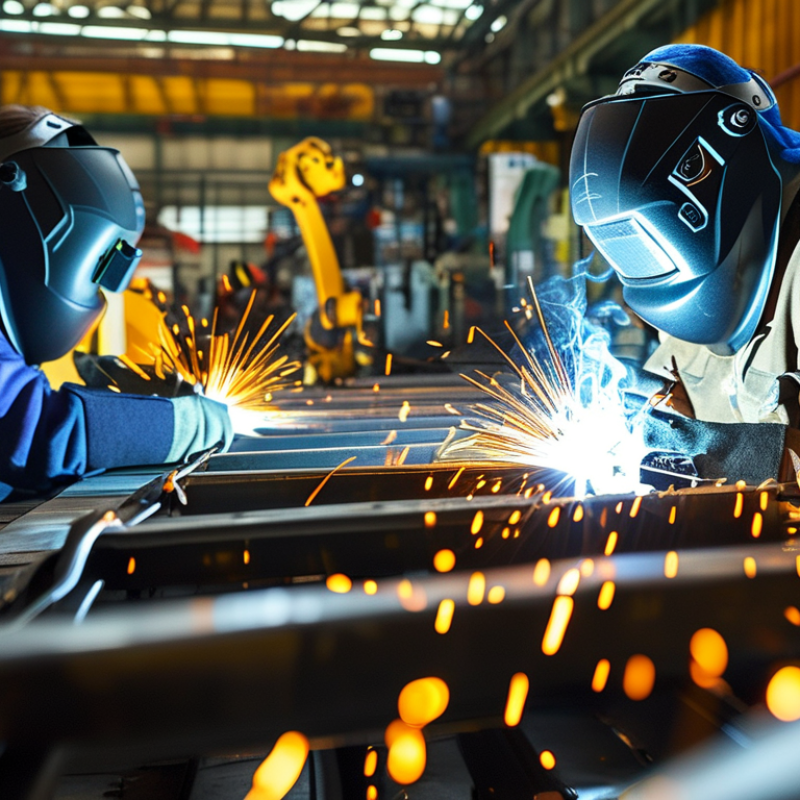
Overlap welding wire production lines are essential in modern manufacturing. These systems create strong, durable welds between metal wires through precise overlapping techniques. The process increases efficiency and reduces production costs. Typically, these lines automate tasks that were once manual, cutting down on labor time.
Tips: Always ensure proper alignment of wires before welding. Misalignment can lead to weak spots in the weld.
The design of an overlap welding wire production line allows for continuous operation. This setup means that factories can run multiple cycles without significant downtime. The precision in these lines minimizes waste and maximizes productivity. However, regular maintenance is essential. Neglecting this can lead to unexpected failures.
Also, training staff on the operational nuances of the welding line is vital. Often, a lack of understanding can result in inadequate welds, causing potential issues later. Assessing the training programs might uncover gaps that need addressing.
Tips: Regularly audit training materials to ensure they are up-to-date and effective.
| Feature | Description | Benefits |
|---|---|---|
| Production Speed | High-speed production rates with automated processes. | Increases productivity and reduces labor costs. |
| Quality Control | Integrated quality monitoring systems. | Ensures consistent product quality and reduces waste. |
| Flexibility | Capable of producing various wire types and sizes. | Adapts easily to market demands and custom orders. |
| Energy Efficiency | Designed to minimize energy consumption. | Lowers operational costs and reduces environmental impact. |
| User-Friendly Interface | Intuitive controls for easy operation. | Reduces training time for operators and enhances usability. |
: It is a system that creates strong welds between metal wires using precise overlapping techniques.
The process reduces labor time and production costs by automating tasks that were traditionally manual.
Proper alignment of wires is crucial to avoid weak spots in the weld.
Their design allows for multiple cycles with minimal downtime, enhancing productivity.
Neglecting maintenance can lead to unexpected failures, affecting production negatively.
Proper training ensures adequate weld quality; gaps in training can lead to issues later.
The focus is on automation, real-time monitoring, and eco-friendly materials to enhance efficiency.
Automated systems can increase production efficiency by up to 30%, reducing human error.
Sustainable materials can lower costs but finding the right balance is challenging.
Continuous research is necessary to optimize cost and sustainability practices for the future.
The Overlap Welding Wire Production Line is a specialized manufacturing system designed for producing welding wires that are commonly used in various industrial applications. Key components of this production line typically include advanced welding technology, precision measuring instruments, and automated feeding systems, all aimed at enhancing efficiency and output quality.
The advantages of using an Overlap Welding Wire Production Line are significant, such as improved weld strength, reduced material waste, and increased production speed. These characteristics make it a vital resource in industries like automotive, construction, and electronics, where reliable and durable welding solutions are required. Looking toward the future, advancements in overlap welding technology promise enhancements in automation and sustainability, further cementing the role of the Overlap Welding Wire Production Line in modern manufacturing processes.

 Orient PengSheng